


- Home
- About Us
-
Products
- Cut & Bent Rebar
- Reinforcing Fabric
- Prefab Solutions
- Couplers
- Construction Accessories
- Concrete, Plastic and Wire Reinforcement Spacers
- Construction Chemicals, Grouts, Mortars and Resins
- Gabion Baskets
- Groundwork and Slab Accessories
- Rebar Couplers
- Permanent Formwork,Column Formers and Formwork Accessories
- Site Safety and Test Equipment
- Waterproofing and Gas Barriers
- Spread Anchor System
- Lifting & Fixing Systems
- Precast Accessories
- Brickwork Products
- Technical Solutions
- Sustainability
- Technical Services
- Resources
- Contact Us
Read Time: 6 min
Table of Contents
- Why cut and bend rebar improves accuracy in construction
- How cut and bend rebar increases construction efficiency
- How cut and bend rebar reduces labour on site
- How cut and bend rebar improves construction site safety
- How cut and bend rebar reduces material waste in construction
- Why cut and bend rebar is ideal for complex reinforcement projects
- Cut and bend rebar and UK standards compliance
- Why cut and bend rebar is the preferred method in modern construction
- Frequently asked questions about cut and bend rebar
What are the benefits of cut and bend rebar in construction?
Key takeaways:
Cut and bend rebar improves construction efficiency, accuracy and safety by delivering reinforcement that is pre-fabricated to specification. It reduces on-site labour, minimises waste and ensures consistent quality aligned with design requirements.
Cut and bend rebar has become a standard approach across much of the UK construction industry, particularly as projects demand greater precision and tighter delivery programmes such as defense infrastructure. While reinforcement bars can still be supplied in stock lengths for on-site processing, pre-fabricated reinforcement offers clear advantages that extend well beyond convenience.
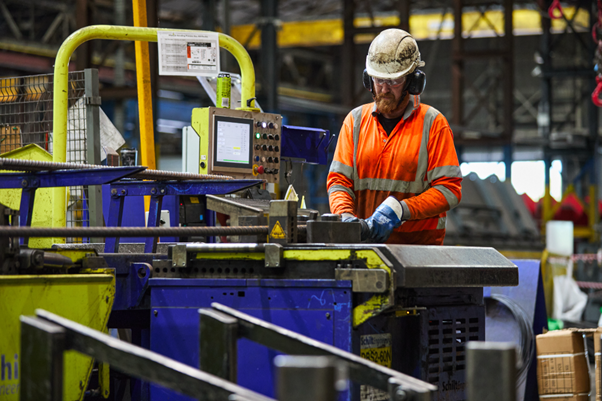
At its core, cut and bend rebar is about control. Reinforcement is manufactured off site using a bar bending schedule, ensuring each bar is cut, shaped and prepared exactly as specified before it arrives on site. This changes how projects are delivered, shifting time and risk away from the construction phase and into a more controlled production environment.
Why cut and bend rebar improves accuracy in construction
Accuracy is fundamental in reinforced concrete construction. The performance of a structure depends on correct bar placement, spacing and geometry, all working together as designed.
Cut and bend rebar supports this by ensuring each bar is produced to precise dimensions. Bending angles, lengths and shapes are formed under controlled conditions, reducing the variability that can occur with manual on-site fabrication. This consistency helps maintain correct concrete cover, improves load distribution and reduces the likelihood of defects or rework.
For projects with complex reinforcement layouts, this level of precision becomes even more important. Pre-fabrication ensures that what is installed on site reflects the original design intent. This is exactly the level of precision and reliability that 7 Steel Service can provide, delivering accurately cut and bent reinforcement to specification so on-site installation reflects the design intent with confidence and consistency.
How cut and bend rebar increases construction efficiency
Time is always a critical factor in construction. On-site cutting and bending can slow progress (this can be up to 3 or 4 times slower), particularly where large volumes of reinforcement are involved.
By supplying rebar ready to fix, cut and bend services allow site teams to focus on installation rather than preparation. Bars are typically delivered labelled and organised according to the bar bending schedule, making them easier to handle and place. This simplifies workflow and can significantly reduce installation time across the duration of a project.
While the time saving on individual tasks may seem small, the cumulative impact across foundations, slabs, beams and columns is considerable.
How cut and bend rebar reduces labour on site
Cut and bend rebar also helps optimise labour on site. Removing the need for extensive cutting and shaping means fewer resources are required for those activities.
This allows skilled workers to focus on accurate placement and fixing, rather than spending time on fabrication tasks. It also reduces the reliance on manual processes, which can vary depending on experience and working conditions. The result is a more efficient use of labour and a more consistent outcome across the project.
How cut and bend rebar improves construction site safety
Safety is an ongoing priority in construction, and reducing unnecessary on-site processes plays an important role in improving working conditions.
On-site rebar fabrication involves cutting equipment, manual handling and repetitive tasks, all of which introduce potential risks. By moving these activities off site, cut and bend rebar reduces exposure to these hazards. Fewer tools, less handling and a more streamlined installation process contribute to a safer and more controlled environment.
How cut and bend rebar reduces material waste in construction
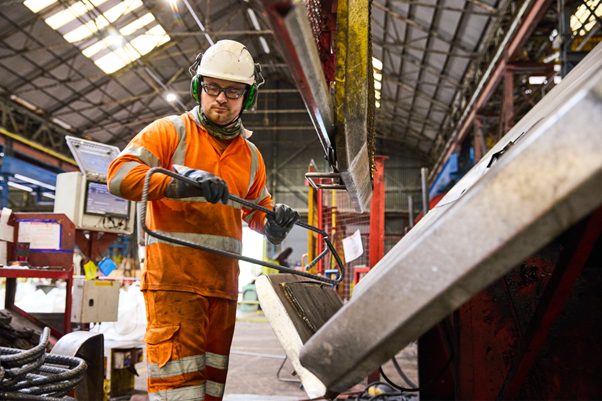
Material efficiency is another key benefit. When rebar is cut from standard stock lengths on site, offcuts and unused sections can quickly accumulate, particularly if planning is not precise. Typical on-site waste from cutting rebar to standard stock lengths can range between 5–8% due to offcuts and unused sections, however this can be significantly reduced to 3% or less through the use of cut and bent reinforcement.
Cut and bend services work directly from bar bending schedules to optimise material usage. Each bar is produced to the required length, reducing excess and improving yield from the raw material. This not only lowers waste but also supports more sustainable construction practices by making better use of steel.
Why cut and bend rebar is ideal for complex reinforcement projects
Modern construction projects often involve detailed reinforcement designs, with specific shapes, angles and configurations required throughout the structure.
Producing these accurately on site can be challenging, particularly under time pressure. Cut and bend rebar allows these requirements to be met in a controlled environment, ensuring even complex shapes are delivered ready for installation. This improves buildability and reduces the risk of delays caused by on-site adjustments.
Cut and bend rebar and UK standards compliance
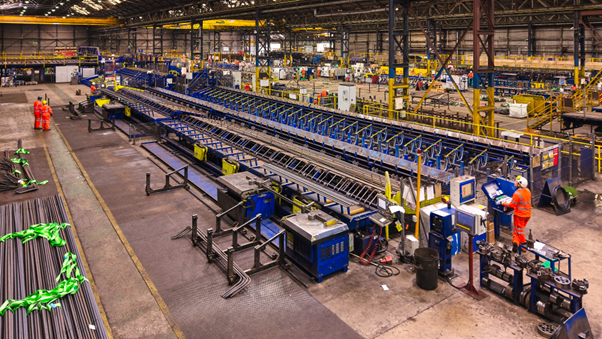
Cut and bend reinforcement is typically produced in line with UK standards such as BS 8666, ensuring that all bars meet required specifications for scheduling, dimensioning and bending.
At 7 Steel Service, reinforcement is processed using customer bar bending schedules and supplied with full traceability. This supports compliance across the supply chain and ensures that reinforcement performs as intended once installed.
Why cut and bend rebar is the preferred method in modern construction
The shift towards cut and bend rebar reflects broader changes in construction. Projects are more complex, timelines are tighter and expectations around quality and efficiency are higher than ever.
By reducing on-site work, improving accuracy and supporting better use of materials, cut and bend reinforcement aligns with these demands. It provides a more controlled and reliable approach to reinforcement, helping projects run more smoothly from design through to completion.
Frequently asked questions about cut and bend rebar
Does cut and bend rebar save time on site?
Yes. Because the reinforcement arrives pre-fabricated and organised, installation is faster and site teams can focus on fixing rather than cutting and bending.
Is cut and bend rebar more accurate than on-site fabrication?
Yes. Off-site fabrication uses controlled processes and machinery, ensuring consistent lengths and bending angles that are difficult to achieve manually on site.
Can cut and bend rebar be used for complex reinforcement designs?
Yes. It is particularly beneficial for complex projects, as detailed shapes and configurations can be produced accurately in advance, reducing the need for adjustments during installation.
June 25, 2026